Science is growing faster than previously documented. Hanson et al. (2024) report 47% cumulative growth between 2016 and 2022, from 1.92M to 2.82M articles, and 5.6% year-on-year exponential growth.
We repeat this analysis with a fully open database, extend it through 2025 to revisit growth rates, and decompose by country and domain to explore relative contributions to growth. This analysis uses OpenAlex, an independent open database, filtering by DOI-indexed article types. All code is open source. OpenAlex data validates the Hanson et al. study, finding a comparable cumulative growth (48.1%) and a fitted exponential rate of 6.9%/yr.
Growth is accelerating
Extending the analysis through 2025 reveals that growth is accelerating. Mean year-over-year growth rate rose from 6.8% (2016–2022) to 8.3% (2022–2025), with 2025 alone at +11.9%. The 2025 figure is the highest single-year growth rate in the DOI-indexed record since 2002.
Table 1. Year-over-year growth rates since 2022.
| Year | Articles | YoY Growth |
|---|---|---|
| 2022 | 5,701,659 | +3.8% |
| 2023 | 6,108,201 | +7.1% |
| 2024 | 6,464,543 | +5.8% |
| 2025 | 7,233,887 | +11.9% |
OpenAlex shows a +379.5% cumulative growth from 1.51M in 2000 to 7.23M in 2025.
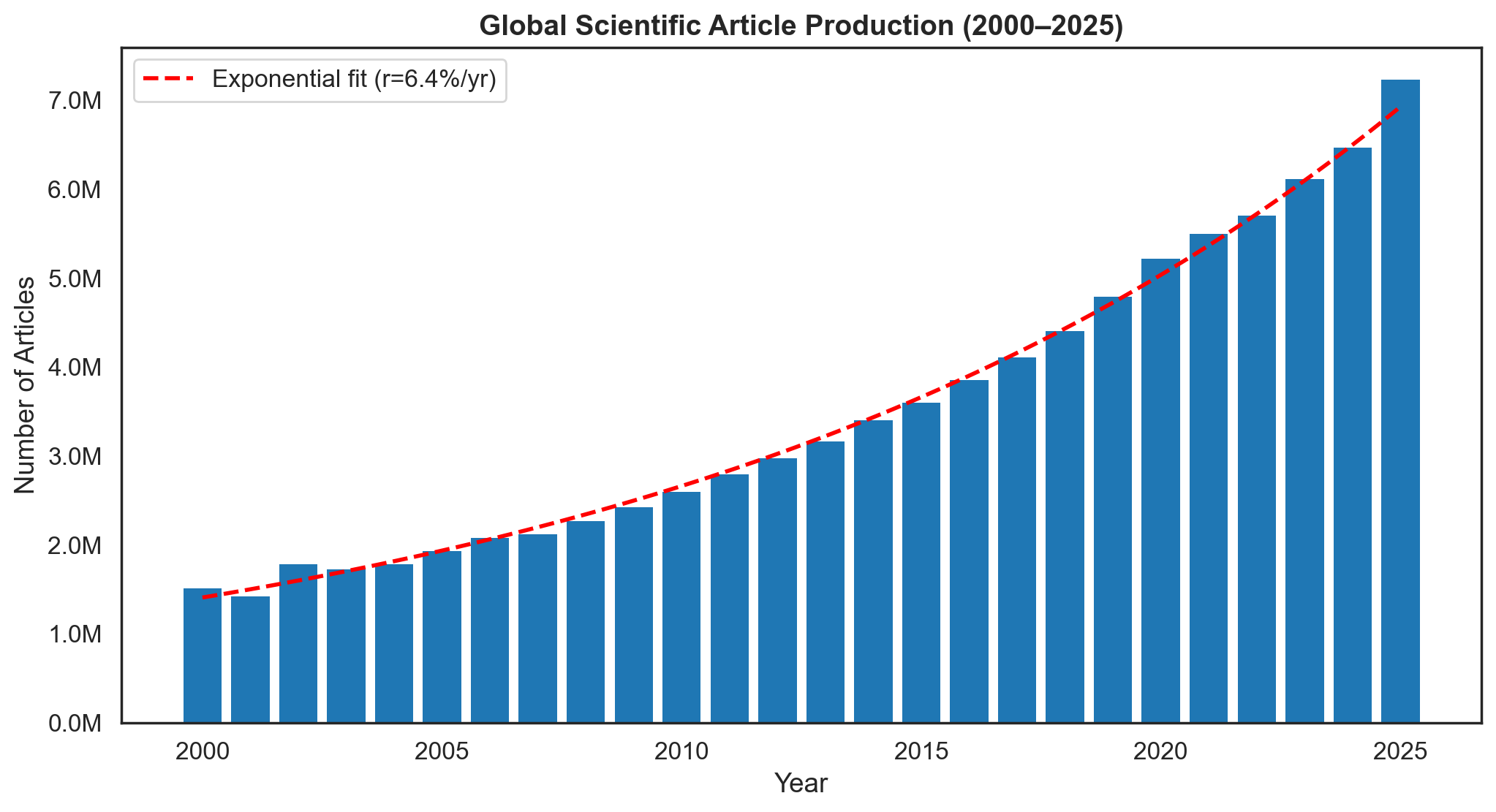
Figure 1. Total DOI-indexed articles per year from 2000 to 2025, with fitted exponential trend (6.4%/yr).
Social Sciences grew fastest while Physical Sciences added the most articles
Grouping by domain, all four OpenAlex domains grew from 2015 to 2025, but at different rates. Physical Sciences added the most articles in absolute terms (+1,363,414), but Social Sciences grew at the fastest rate (+139.3%). Domain composition has been relatively stable, with the notable exception of Social Sciences, which gained 4.4 percentage points at the expense of the other three domains.
Table 2. Domain growth rates over the last decade.
| Domain | 2015 | 2025 | Growth | Share 2015 | Share 2025 |
|---|---|---|---|---|---|
| Physical Sciences | 1.41M | 2.78M | +96.4% | 39.6% | 38.6% |
| Social Sciences | 839K | 2.01M | +139.3% | 23.5% | 27.9% |
| Health Sciences | 837K | 1.58M | +88.5% | 23.5% | 21.9% |
| Life Sciences | 477K | 827K | +73.6% | 13.4% | 11.5% |
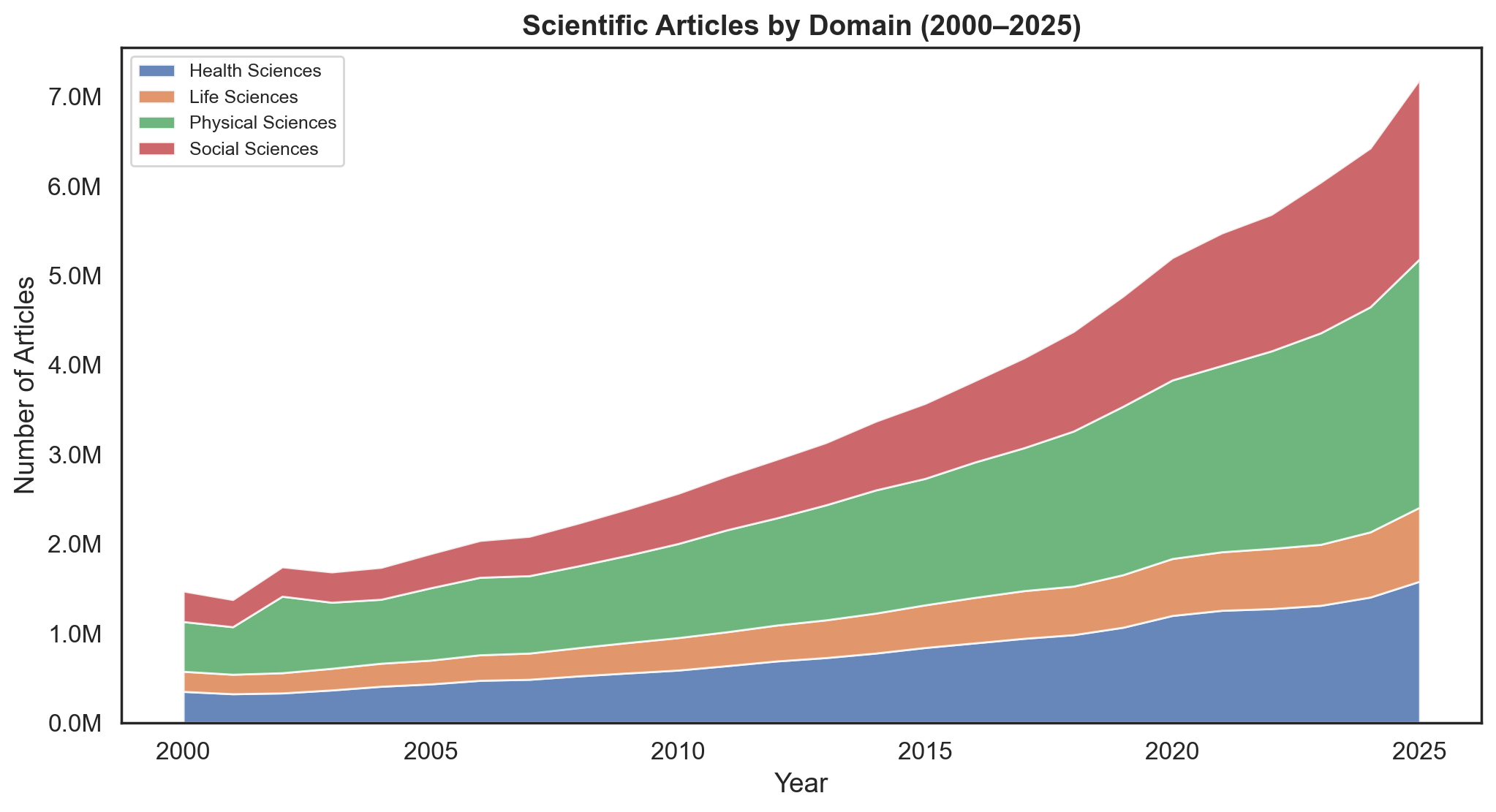
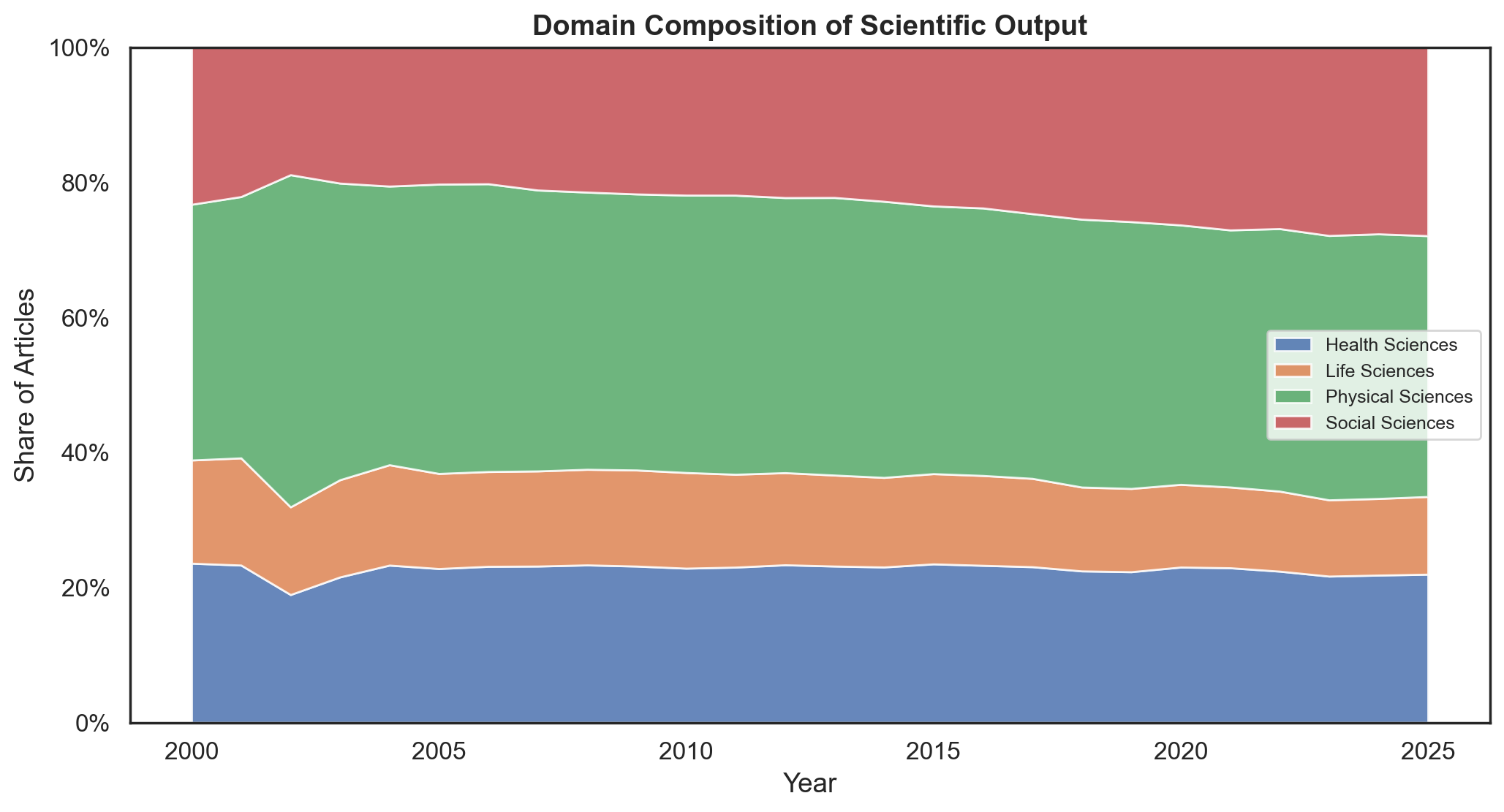
Figure 3. Absolute article counts by domain over time (left), domain share of total output over time (right).
China surpassed the US in 2022; the Global South drives the majority of growth
In 2022, China overtook the US in number of articles (891,175 vs 794,008) and global share (15.6% vs 13.9%).
- China's output has increased 43× from 27,173 articles in 2000 (1.8% of global) to 1,177,692 in 2025 (16.3%)
- The US's output has increased 2.8× from 336,687 in 2000 (22.3%) to 947,239 in 2025 (13.1%)
- The fastest growing countries in the 2015-2025 window (that had a minimum 10K articles in 2015) are predominantly from the Global South: Indonesia (+1246%), Pakistan (+433%), Saudi Arabia (+295%), Nigeria (+258%), China (+221%), Ukraine (+196%), Thailand (+187%), Hong Kong (+178%), India (+174%), Turkey (+164%)
- China's increase over this period (from 366K to 1.18M articles) only reflected the fifth highest growth rate, but its increase alone exceeded the total 2025 output of 198 of the 200 countries returned by the API query. Only the US and China itself produced more in total than what China added in the last decade.
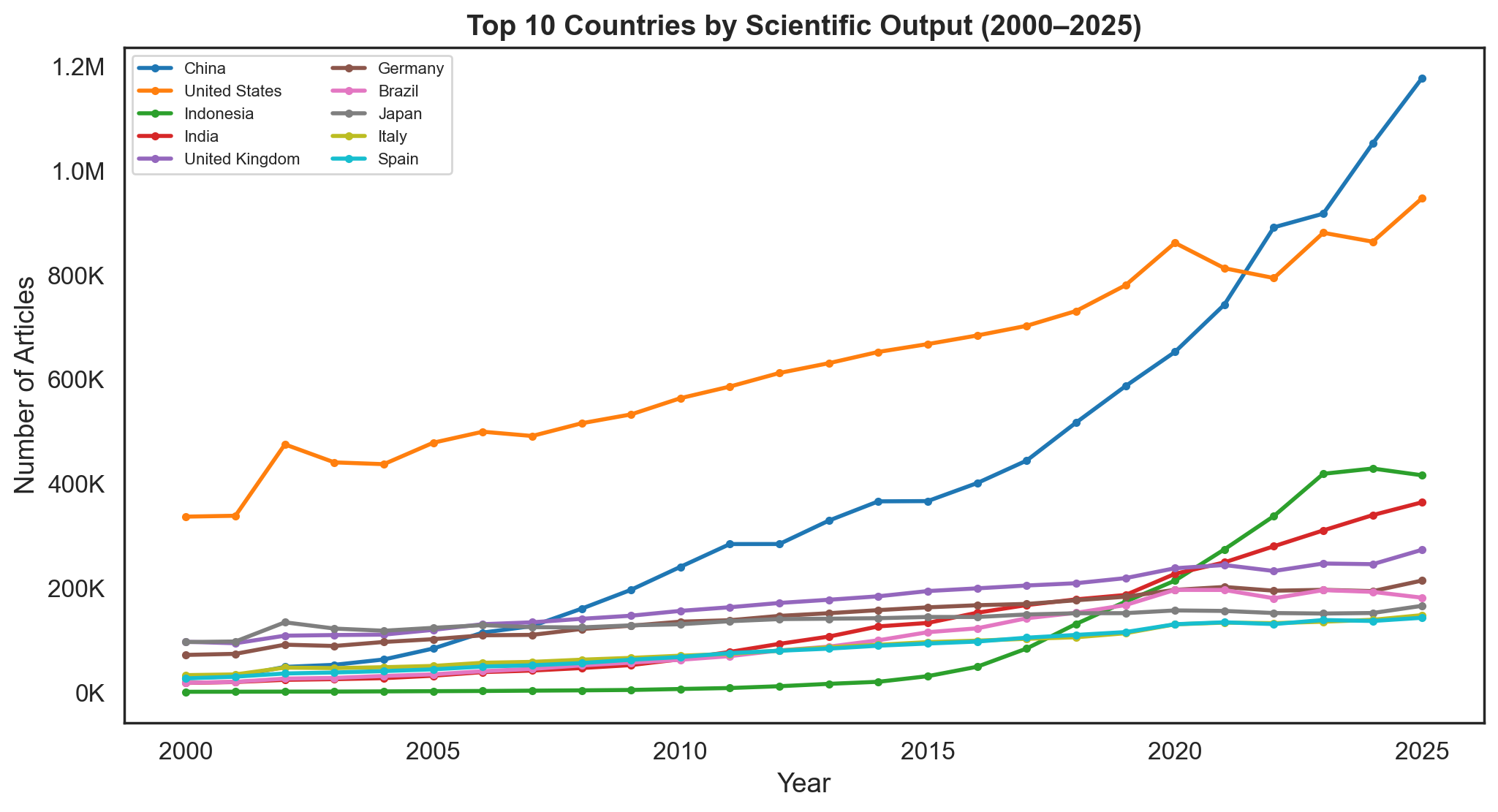
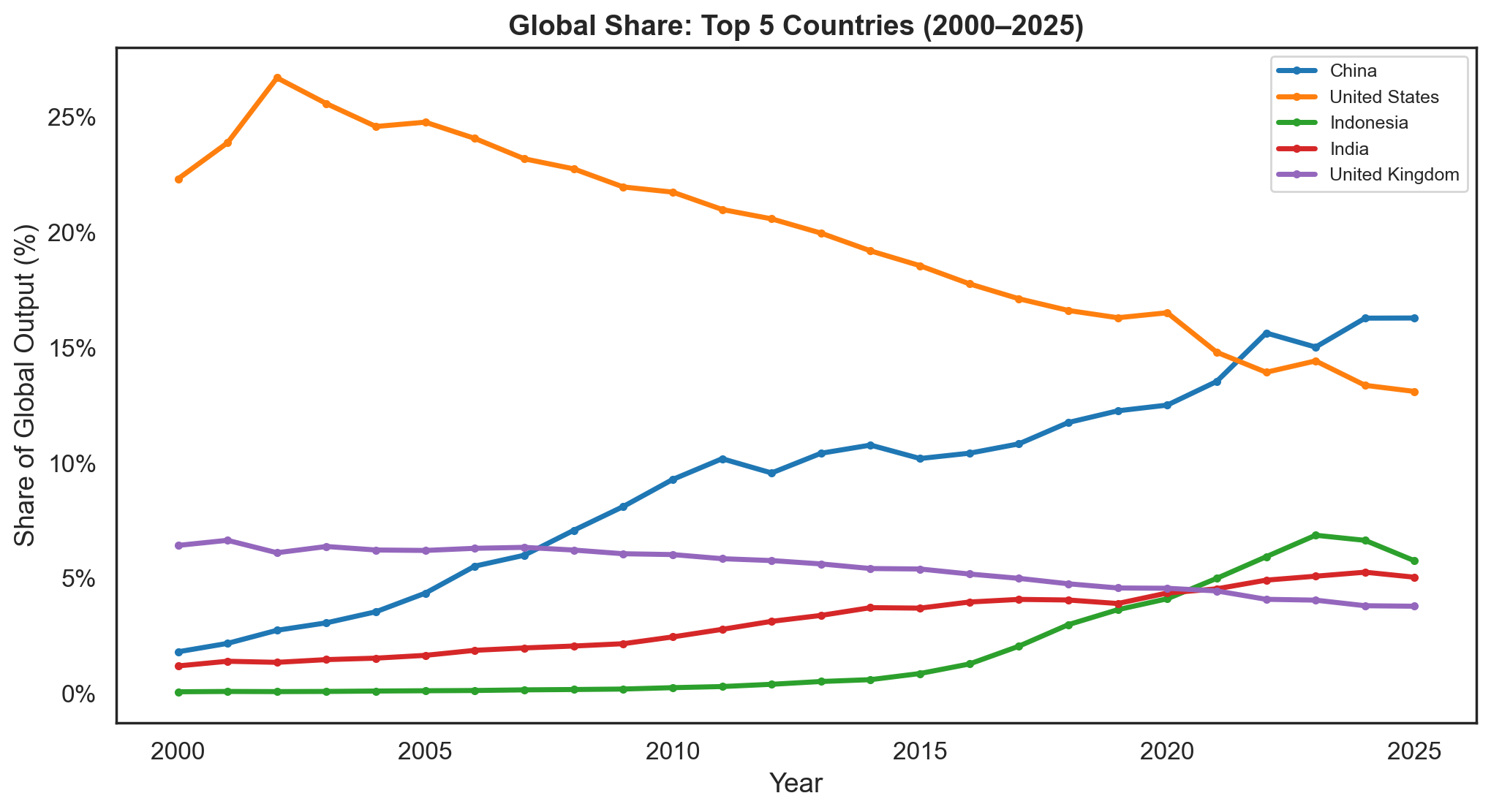
Figure 4. Absolute article counts for the top 10 countries by output from 2000 to 2025 (left), and global share of total articles for the top 5 countries over the same period (right).
Data Limitations
Data were obtained from the OpenAlex API (Priem et al., 2022), which has a larger corpus size than Scopus or WoS (Maddi et al., 2025; Culbert et al., 2025). We limit to type:article, has_doi:true to restrict results to DOI-indexed works registered through providers such as Crossref and DataCite. Despite higher absolute counts than those of Hanson et al. (2024) (e.g., 3.85M vs 1.92M articles in 2016), growth rates align suggesting comparable trends.
Conclusion
Growth in publication volume has accelerated. We report a 6.8% YoY growth rate for 2016-2022 which has increased to 8.3% in the years since (2022-2025). The 2025 growth rate of +11.9% is the highest in over two decades. Over the last 25 years, global article output on OpenAlex has grown 4.8× from 1.51M to 7.23M (+379.5% cumulative growth from 2000 to 2025).
The geography of science has also fundamentally shifted. US share fell from 22.3% to 13.1%, China rose from 1.8% to 16.3% and became the top producer in 2022, and the 10 fastest-growing systems are predominantly from the Global South. China's added output over the last decade exceeded every other country's total 2025 output, with the exception of only the US and China itself.
The scientific community must confront these trends. Peer review, editorial systems, and knowledge synthesis hinge on infrastructure that was designed for a different literature composition and volume. These processes may be under strain as the system continues to accelerate and shift in its geography.
Quality dimensions, such as citation impact, retraction rates, reproducibility, should be measured to understand how quality is impacted as volume grows.
All data and code are fully open and reproducible in this repository.
References
- Culbert, J. H., Hobert, A., Jahn, N., Haupka, N., Schmidt, M., Donner, P., & Mayr, P. (2025). Reference coverage analysis of OpenAlex compared to Web of Science and Scopus. Scientometrics, 130, 2475–2492.
- Maddi, A., Maisonobe, M., & Boukacem-Zeghmouri, C. (2025). Geographical and disciplinary coverage of open access journals: OpenAlex, Scopus, and WoS. PLOS ONE, 20(4), e0320347.
- Hanson, M. A., Gómez Barreiro, P., Crosetto, P., & Brockington, D. (2024). The strain on scientific publishing. Quantitative Science Studies, 5(4), 823–843.
- Priem, J., Piwowar, H., & Orr, R. (2022). OpenAlex: A fully-open index of scholarly works, authors, venues, institutions, and concepts. arXiv:2205.01833.